Εμφάνιση αναρτήσεων με ετικέτα texts in english. Εμφάνιση όλων των αναρτήσεων

Τρίτη 4 Νοεμβρίου 2025

✔ Την ώρα που βλέπεις κάποιον να αμαρτάνει ... |Even when you see ...


    |Μήπως επιτέλους το συνειδητοποιήσουμε!

Πως δεν γίνεται αλλιώς...

Και πως δεν μας παίρνει...|


Παρασκευή 18 Ιουλίου 2025

✨ Εορτές & μνήμες των ημερών.. |Όρεξη να΄χεις! (και Ευσέβεια...)

[Απίθανο υπερπλήρες αφιέρωμα του "Νεκρού στον κόσμο" στις αγίες και τους αγίους, στα τελειώματα του Ιούλη...]


Από εδώ
 
Οι μεγάλοι (και αγαπημένοι του λαού μας) άγιοι, που συνθέτουν ένα μεγάλο εορταστικό επταήμερο. 
Αυτό το επταήμερο δεν επιτρέπεται να το ξεχάσουμε, δεν επιτρέπεται να το αγνοούν τα παιδιά σας / τα παιδιά μας. 
Είναι κομμάτι της καρδιάς του πολιτισμού μας, παράγοντας ποιότητας ζωής, σημείο αντίστασης στην αλλοτρίωση, στην υποδούλωση, στη νέα τάξη πραγμάτων. 
Γι' αυτό, παρακαλώ (οπωσδήποτε όμως), ένα κλικ αγάπης και ορθόδοξης αυτοσυνειδησίας στις αναρτήσεις που περιλαμβάνονται σ' αυτό το αφιέρωμα. 
Έτη πολλά κι ευλογημένα - και καλό παράδεισο σε όλους - με τις πρεσβείες των αγίων μας. Αμήν.


22-24 Ιουλίου: αγίες Μαρία Μαγδαληνή, Μαρκέλλα η Χιοπολίτιδα, Πελαγία της Τήνου, Χριστίνα η Μεγαλομάρτυς - άγιοι Μενέλαος ο θαυματουργός ασκητής της Γαλλίας, Ιεζεκιήλ ο προφήτης, Απολλινάριος και Βιτάλιος της Ραβέννας και άλλοι...

24 Ιουλίου: οι πρωτομάρτυρες της Ρωσίας πρίγκιπες άγιοι Μπόρις και Γκλεμπ, που αρνήθηκαν να πολεμήσουν κατά του αδελφού τους & δολοφονήθηκαν από αυτόν: The "Abels" of Russia.


25 Ιουλίου, της αγίας Άννας, μητέρας της Παναγίας & Γιαγιάς του Χριστού


Αγία Ολυμπιάδα η διακόνισσα και προστάτιδα των καταθλιπτικών (25 Ιουλίου)

Saint Anna, the Mother of Theotokos, and Saint Olympias the Deaconess (July 25)

26 Ιουλίου, της αγίας μεγαλομάρτυρος και θαυματουργού Παρασκευής

Η αγία που κρατάει δίσκο με δυο μάτια

Η άρνηση του μαρτυρίου (μνήμη αγίας Παρασκευής, 26 Ιουλίου)
 
Άγιος Μωυσής ο Ούγγρος, ο ελεύθερος σκλάβος, που αρνήθηκε να γίνει σεξουαλικός σκλάβος (26 Ιουλίου)...
  
Ο γιατρός και ιερέας άγιος Ερμόλαος, δάσκαλος του αγίου Παντελεήμονα & προστάτης των μικρών παιδιών (26 Ιουλίου)

The girl who holds in her hand two eyes and a free slave man (who refused to become a sexual slave)

27 Ιουλίου, του αγίου μεγαλομάρτυρος Παντελεήμονος του Ιαματικού

Ένας αριστοκράτης, υγιής, ωραίος & πλούσιος νέος και γιατρός...

St. Panteleimon the Great Martyr and Unmercenary, and those with him

27 Ιουλίου: Ένας απλός άνθρωπος τα βάζει με πλήθος Γενιτσάρων! (άγιος Χριστόδουλος ο εκ Κασσάνδρας)...

28 Ιουλίου: Παραλίγο βασίλισσα!... - Η αγία και τα τρία μήλα (αγ. Ειρήνη Χρυσοβαλάντου)


St. Irene Chrysovalantou the Wonder Worker


Άγιος Ιώβ της Ούγκλεα († 15/28 Ιουλίου 1985), ένας νέος άγιος με άφθορο λείψανο

Άγιοι και πανηγύρια του Ιούλη

Το μυστικό των Παρθενομαρτύρων

Οι θρησκευτικές γιορτές ως παράγοντας ποιότητας ζωής

Δώστε και στους τουρίστες μας κάτι, να χαρούν και (γιατί όχι;) να σωθούν.

Παρασκευή 11 Ιουλίου 2025

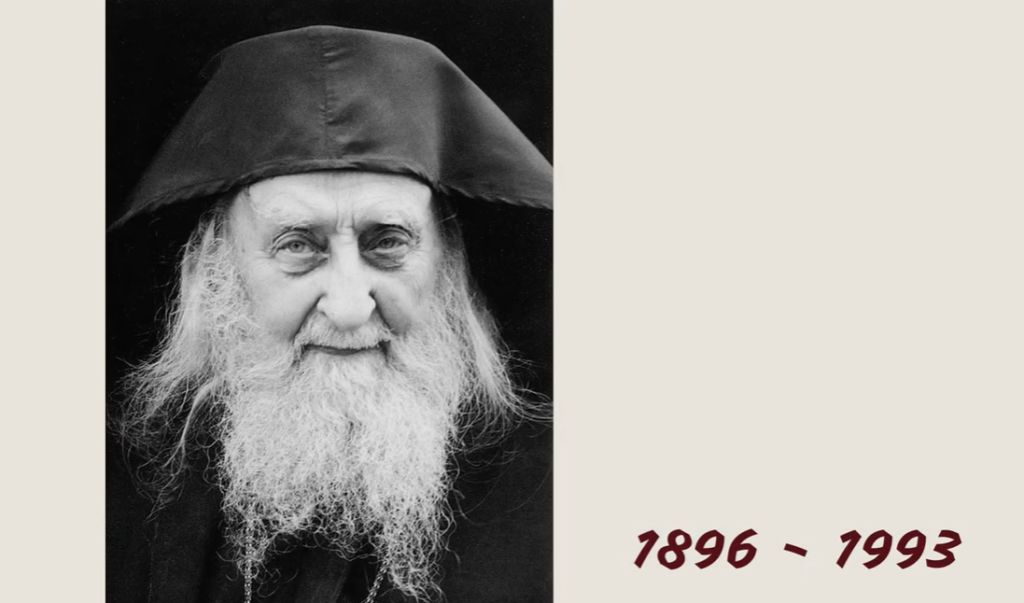
The life of St Sophrony the Athonite (of Essex) for children – VIDEO |για τα αγγλόφωνα πιτσιρικάκια μας...

The life of St Sophrony the Athonite (of Essex) for children –  VIDEO
Α short film about the life of St Sophrony the Athonite
Made for the Sunday School of the Greek Orthodox Church of Manchester
St Sophrony was born in 1896 in Moscow. He had a big family with many siblings. He loved painting from a very young age. He started painting before he could say mum and dad. As a boy, he was watching his parents praying.
His nanny was taking him to the church. There, she spent hours praying while he sat next to her. This is how he started praying since he was a child. Prayer was a natural part of his life.
As he was growing up, his love for painting was growing too. He studied fine arts and began a career as an artist. During this period, he started having doubts about God and he tried to find the truth in other eastern religions. The warm prayers of his mother and nanny helped him return to Orthodoxy. He repented deeply for this period of turning away from God in all his life.
When he was 26 years old, he moved to Paris.
He continued his painting with passion and soon he was renowned as an artist in Paris. At the same time, he tried to devote himself to prayer. He loved prayer and painting more than anything. But, he soon realised that it was not possible to dedicate himself to two things. He chose prayer over painting, giving up everything for God. And God blessed him richly.
He departed for Mount Athos when he was 30 years old. He became monk and he was named Sophrony.
At his monastery he met a great elder, Saint Silouan. Saint Silouan guided him through his efforts to come closer to God. Meeting Saint Silouan completely changed his life.
Before falling asleep in the Lord, Saint Silouan gave him all his writings. A few years later, father Sophrony decided to collect all his elders writings in a book. To achieve it he moved back to Paris.
In Paris he fell very ill. Doctors believed that he would die. But, with God’s help he recovered.
Some young people found out about him and gathered close to him, asking him to start a monastery.
They found a suitable place in Essex, England.
That’s where they founded the monastery of St John the Baptist. He was 63 at the time and he lived the remaining years of his life there. During this period, he ministered all the people that flooded the monastery to seek for a spiritual father. He especially loved children, and they loved him.
He fell asleep in the Lord on 11th July 1993. He was 97 years old.
Father Sophrony pray to God for us!

Τετάρτη 2 Απριλίου 2025

Παρασκευή 28 Φεβρουαρίου 2025

~ If we remember that thief who, for a single confession, was taken into Paradise, we shall realize that... |St. John Cassian


If we remember that thief who, for a single confession, was taken into Paradise, we shall realize that it was not for the merit of the life he lived that he obtained so great blessedness, but that it was his by the gift of God, Who had mercy on him. 

Or let us think of David, the king, whose two such grievous and awful crimes were wiped away by one word of penitence. 

Neither here do we see that the merit of what he did was equal to obtaining pardon for such great offense, but the grace of God did the more abound when on the occasion of true penitence He did away with all that weight of sin for one single word of genuine confession. 

Again, when we consider the beginnings of man’s calling and salvation, which, as the Apostle tells us, is not of ourselves or of our words, but we are saved by the gift and grace of God, we shall be able clearly to perceive how the end of perfection is not “of him that willeth, nor of him that runneth, but of God Who showeth mercy,” Who makes us victors over our vices, although we have no merit at all of life or labors to weigh against them, nor does the effort of our will avail for us to reach the steep summit of righteousness, or to subdue the flesh which we are bound to use… 

For the outcome of all good flows from His grace, Who hath bestowed so great an eternity of bliss and such immeasurable glory, with manifold generosity, upon the weak will and the short life-work of man.

~ St. John Cassian, Institutes, Book XII, chap. xi


Τετάρτη 28 Αυγούστου 2024

✨ Ώστε να ριζώσει ο Θεός...


Και για να μας καταλαβαίνουν 
που και που
και κάποια αδέρφια 
που δεν είναι από τα μέρη μας...
|Και δεν φαντάζεστε 
πόσα είναι καθημερινά!
Από κάθε γωνιά του κόσμου...
Τεράστια η χαρά.
αλλά και η ευθύνη μας...|


Τετάρτη 19 Ιουνίου 2024

☆ Passionately Drunk


Fr. Stephen Freeman

Glory to God For All Things

The Philokalia, that wonderful collection of writings by the fathers on prayer of the heart, has as its full title, The Philokalia of the Neptic Saints gathered from our Holy Theophoric Fathers, through which, by means of the philosophy of ascetic practice and contemplation, the intellect is purified, illumined, and made perfect. 

Little wonder it is known popularly as the Philokalia. 

That word, Philokalia, means “the love of beautiful things.”

 It is not a reference to expensive, decorative items, but to the things which are made beautiful by their union with God. 

All things are beautiful inasmuch as they are united to God, Who is Beauty itself.

Another important word in the title is the adjective, “Neptic” (νηπτικός). 

It has a variety of translations: sober, watchful, vigilant. It refers to those who, having their earthly senses purified, have become truly aware of God and dwell in Him.

 This title is especially used to describe the fathers of the Hesychast tradition in Orthodoxy, the tradition of ceaseless prayer and inner stillness associated with the monastic life.

To describe these fathers as “sober,” is very insightful. 

For our experience with the passions, the disordered desires of our body and soul, is often an experience of drunkenness.

For those who sleep, sleep at night, and those who get drunk are drunk at night.


But let us who are of the day be sober, putting on the breastplate of faith and love, and as a helmet the hope of salvation.


For God did not appoint us to wrath, but to obtain salvation through our Lord jesus Christ, who died for us, that whether we wake or sleep, we should live together with Him (1 Thess. 5:7-10).

The man who is drunk is famously unaware of his surroundings. 

He stumbles physically, mentally and spiritually, barely aware of his own imbalance. 

The passions have the same ability to blind us. 

In anger we are aware primarily of our own anger. 

What we see, we see through the haze of the energy that pulses through our mind and body.

All of the passions have this property. 

They consume us and become the primary lens through which we see the world and with which we react. 

Thus we are described as in “delusion.” Those who see the world through their passions do not see the truth of things. 

They see their own passions.

There is a social aspect to the passions – they are not restricted to an individual’s experience. 

Whole societies, or significant segments within it, can be drunk with the same passions. 

Thus a whole society can be drunk with the passion of fear or hatred.  

Such a passion is reinforced by being repeatedly affirmed by those around us. 

Many aspects of culture are simply a communion of the passions.

We live in an age where the passions are carefully studied and used as the objects of marketing. 

Those things that are sold to us (even those that supposedly appeal to our intellect) are marketed to our passions. 

Apple computer famously researches the “feel” of its packaging, presenting a sensual experience that is associated with quality, precision and value. 

It is a successful strategy across the whole of our culture.

However, those who are “drunk” with the passions also yield themselves as victims to their intoxication. 

Political parties pour massive amounts of money into their campaigns simply to create and nurture the passions by which people vote. 

We are not governed by reason or informed decisions. 

Most of what you or I think about political subjects is a description of the passions to which we are enslaved. 

The political cynicism of many is, to a degree, a recognition of our disgust with the politics of passion.

By the same token, most of the opinions we nurture are equally the product of our passions. 

We think, we believe, we decide, we act largely in accord with the passions to which we are enthralled. 

Theological debates are generally arguments between one person’s passions and another’s. It is a conversation between drunks.

And so the Church values the holy, sober fathers. 

These are the men and women who have walked the narrow way of salvation, “putting to death the deeds of the body.” 

Inner stillness is the state of freedom from disordered passions. 

The neptic fathers do not cease to desire (they are not Buddhists). 

But their desires have been purified and healed – restored to proper order. 

Sobriety means desiring the right thing in the right way at the right time. 

Traditionally, this purification and healing come as a result of a life of repentance, fasting and prayer. 

It slays demons and heals the wounds of the soul. 

All things are brought into obedience to Christ.

It is the life that Scripture enjoins:

Be sober, be vigilant; because your adversary the devil walks about like a roaring lion, seeking whom he my devour. Rsist him, steadfast in the faith, knowing that the same sufferings are experienced by your brotherhood in the world (1 Peter 5:8-9).

There is a story in the Desert Fathers that illustrates such vigilance. 

A community of monks once heard a rumor that one of their number was harboring a woman in his cell. 

They went to the elder and complained. 

While they became yet more agitated, the elder slipped away to the cell of the erring monk. 

Finding the woman there, he hid her in a large earthen vessel. 

He placed the lid on the vessel and sat on it. 

Soon the angry monks arrived at the cell and began to search for the woman. 

Out of respect for the elder they overlooked the vessel on which he was sitting. 

Finding nothing, they apologized to the erring monk and left. 

The elder, rose from his seat and said to the monk, “Pay attention to yourself.”

It is a call to sobriety. 

The angry monks were drunk with their own self-righteousness. 

Their sin was at least as great as the erring monk. 

The elder alone was sober. 

His sobriety hid the sin of a man from those who would have harmed him, and revealed the sin to the one who needed to be healed. 

The word of healing was kind and without judgment. 

“Pay attention to yourself.” 

It is the simple word of St. Peter, “Be sober.”

For all of us, in every moment of the day with regard to all things and all people, it is good to pay proper attention to ourselves.

This prayer of St. Isaac of Syria, great among the neptic fathers, is one of my favorites:

I knock at the door of Thy compassion, Lord: send aid to my scattered impulses which are drunk with the multitude of the passions and the power of darkness.

Thou canst see my sores hidden within me: stir up contrition – though not corresponding to the weight of my sins, for if I receive full awareness of the extent of my sins, Lord, my soul would be consumed by the bitter pain from them.

Assist my feeble stirrings on the path to true repentance, and may I find relief from the vehemence of sins through the contrition that comes of Thy gift, for without the power of Thy grace I am quite unable to enter within myself, become aware of my stains, and so, at the sight of them, be able to be still from great distraction.


Δευτέρα 22 Απριλίου 2024

F. Athanasios Mytilinaios: Do not underestimate farmwor |η ομιλία ακούγεται κανονικά στα ελληνικά. Έχουν μπει όμως και αγγλικοί υπότιτλοι...

Father Athanasios Mytilinaios was born in Athens in 1927.
He studied electronic physics and was a pilot in the air force.
He was ordained a monk, and a hieromonk and he was an Abbot in the monastery of the Dormition of the Theotokos, Komnenion, Larissa, Greece.
He slept in the Lord in 2006...
|το πρωτοδημοσιεύσαμε το καλοκαίρι του 2022

Κυριακή 4 Φεβρουαρίου 2024

Saint Maria Skobtsova of Paris


Saint Maria Skobtsova was a child of God, and like all saints so she also surpassed obstacles, carried a heavy burden like the Mount Ararat on her shoulders and lived a life of refusing the comforts of this world and offering her life to the needy wherever she would meet them.

We met Melita Antoniadou, iconographer, painter and illustrator, the first Greek that researched the life of this amazing woman by traveling to the areas where Saint Maria lived and martyred during the period of WW2. Melita narrated to us, for the sake of an article in Orthodox Truth, how she was inspired to start this investigative journey following Saint Maria’s footsteps. “Many years ago, my kumbara (I am godmother to her daughter) gave me a book, the biography of Mother Maria Skobtsova. The subtitle was “A Fool for Christ in Modern Times”. It was the nicest present. I read it time and again, underlying, copying, and offering it to others as a present myself.


She was a most unique, strong, multifaceted personality, free and uncompromising, totally devoted to love of one’s neighbor. The way she ended her life was fitting to the way she lived it: she sealed her life with martyrdom in Ravensbrück concentration camp in 1945.

Poet, painter, iconographer, mayor, wife and mother to 3 children, later a nun, brilliant theologian and protectress of thousands of destitute people, playwright, even of a scenario for a movie - she was especially drawn to fools for Christ, because, as she used to say, “This path may be difficult, but offers us the unbound happiness to feel the hand of God in everything we do”. She was born in Riga and raised in Anapa, a seaside town of the Black Sea, where she served as Mayor, as indeed her father earlier, from where she had to escape with her family, hidden in a cargo ship, ending up, after many adventures, in Paris, to be later named, Saint Maria of Paris. Her parents, devoted Christians, shaped their daughter’s values, sensitivities and goals, although her daring nature didn’t just follow their footsteps, but placed them in front of tough wrestling trials with God. As one of her contemporaries, Mokoulskii, mentions: “She doesn’t recognize nature’s laws, she doesn’t know what cold means, she stays without food or sleep for days on end, she defies sickness or fatigue, she loves danger, she ignores fear and hates any form of comfort, whether it be spiritual or material”

I read this testimony in the book at hand, which was followed by a poem St. Maria wrote:

I searched for singers and prophets
That wait by the stairway to heaven
They see signs of the mystical end,
They sing, elusive for us, songs.

And I found people restless, orphaned, poor,
Drunk, desolate, useless,
Lost in any of their taken paths,
Homeless, naked, breadhungry.

There are no prophesies. Only life
Incessantly plays the role of the prophet.
The end is near, the days are shortened.
You took a slave’s form. Hosanna!

Her biographer, Sergei Hakel, had gathered extracts from her writings, which made such an impression on me that I wanted to know more about this marvelous woman - to get to know her life and her way of thinking. She, who exemplified with her own life all that she wrote, so brilliantly, about the true nature of the Church, about what it means for one to commune the body of Christ - and what it means to sicken it, by confining it in the narrow boundaries of moralism and typolatry that know how to weigh and measure, but not how to set free and give new life.

“Now, she writes, I am absolutely aware that every theory, however important, inevitably carries less value and is less needed than any practical deed, no matter how unimpressive. This is the real situation, the demands of which I first and foremost experience with such intensity.”

In the statute of Orthodox Action, an organization that was formed in order to help Russian refugees, she paraphrased the same thoughts: “We are endowed with secondary targets and we intend to devote ourselves to anything secondary”.

Melita Antoniadou received the book that narrated St. Maria’s life in 2003. Her first thought was that, since the saint passed away when she was 54-years-old, in 1945, there should be still some people alive who had met her. A Belarusian friend of hers, Greta Nikitina, gave her the phone number of a young man in Paris, Basile Arkhipoff, who descended from Russian emigres and had close relations to ACER - the Russian Christian Student Movement or Movement of Christian Youth, which saint Maria had joined when she settled in Paris. So Paris became the first stop for her research.
“I soon found myself in Paris, where I met this fine young man, who told me that the daughter of the close associate of Saint Maria, Saint Dimitri Klepinin, Elene Arjakovsky-Klepinin, had all the archives of Saint Maria, and lived in Germany in the student town of Tubingen. I called her and she agreed to meet me at first opportunity. I decided to travel by car to Germany that summer, via Patras-Ancona (Greece to Italy). In Berlin, good old friends from my student years in England, who had since become a charming family with 3 children, were expecting me. The husband, Jens, believed that the Germans had better look their past straight in the eye, so that the shameful events of WW2 would never be repeated. So, he would take his children, since they were very young, to visit the concentration camps.


Ravensbrück was famous -infamous- for the cruelties that took place there. It was the worst women’s Nazi camp. We went to the camp, which had been reconstructed in the 80s, where apart from the remaining buildings, there were the chambers filled with triple bunk beds, where about 100 prisoners were packed in each chamber; the execution corridors where some prisoners were shot; the huge rolling stones that the prisoners were forced to push for 10 to 12 hours a day; the yard where they were forced to stand for ages, the workplaces for sewing, etc.; the crematoria with the furnaces where the dead bodies of the gassed prisoners (in the gas chambers) were burned. The furnaces had a big tag in front with the name and address of the maker, so that if one needed to order some, they could do so easily... There are no words to describe that sight. 
In front of the furnaces, some of the victims’ relatives had placed a plaque with the name of their loved ones who lost their lives there. There was nothing for Saint Maria. The only thing of hers was in the display room, a small showcase with her handicraft, an embroidered handkerchief and an Orthodox prayer rope with knots. The woman in charge eagerly photocopied the details of the prisoner we asked for.


Next stop, Tubingen, in order to meet Helene Arjakovsky-Klepinin. Even though the German highways are famous for being flawless, toll-less and speed limit-less in many areas, something which made me think that I will make the trip from North to South in a flash, a rainstorm caused the collapse of a major bridge, resulting in a huge delay. I was stuck in the middle of nowhere (the cars formed ten mile lines) for 7 hours. When I finally reached Helene’s home, I expected and old lady to greet me. I was surprised to see a good looking woman around 60! Polite, highly educated and pleasant. It didn’t take long for her to make me feel at home, and there we sat, squatting, surrounded by boxes with archives from the times of Lourmel (the Parisian monastery, which Mother Maria had founded and in which Father Dmitri, Helene’s father, had served in the years before the war broke off).

She showed me the star that the Nazis commanded the Jews to wear, and the baptism certificates that her father issued to the Jews so that they may pass as Christians and escape persecution (this was the reason they were arrested: Mother Maria, Father Dmitri, Yuri, Mother Maria’s son, and Ilia Fondaminsky, an Jewish convert, who tirelessly worked alongside them for the relief and protection of all kinds of desolate people, who found refuge in this atypical monastery in the heart of Paris). Helene possessed all the letters that were saved from the various concentration camps, in which they were sent - of Helene’s father, Mother Maria’s, Yuri’s and Ilias’s.

Father Dmitri Klepinin writes in a letter, that the Grace of God, Which they lived in the camp was such that he would not change the time he spent in that place of martyrdom for anything in the world (and which cost him, and the rest of the group, their lives). Helene had already given the theological writings of Mother Maria to be translated into English. Jim Forest, American writer and publisher of the Orthodox magazine, “In Communion”, would write the Introduction. Helene reassured me that those writings were her most important collection of St. Maria’s theological thought, so I couldn’t wait to lay my eyes on them. But these were just a few of the total of her works, which were published much later in French, and now are being translated into Greek. Helene told me that Mother Maria didn’t hesitate to send her articles to whomever would ask for them, even if this or that magazine or newspaper didn’t have the best reputation. Somewhere, someone would take a “bite”. This was her way of seeing things. As she didn’t hesitate to go to the infamous Paris districts to help young desperate young women that sought some support in order to escape prostitution. For one such girl that was hosted in the monastery, she came into conflict with sister Evdokia who lived there, and who, shocked with Mother Maria’s practices, got up and left.

I mentioned to Helene that there is no plaque in Ravensbrück devoted to Mother Maria’s memory, and the next year she wrote to me, happy to say that a committee in Paris took on the construction of such a plaque. There was a fundraiser, and when it was ready they would go on a pilgrimage to Ravensbrück together with their bishop. This was later established as an annual pilgrimage, after Maria Skobtsova was officially pronounced a Saint by the Ecumenical Patriarchate, together with her son Yuri, Father Dmitri and Ilia Fondaminsky.

Back in Paris, I visited Lourmel Street, where, unfortunately, nothing remains today of Saint Maria’s monastery (since the place was rented), apart from a plaque at the entrance of an apartment building that was built in its place, to remind us what it once had been. The altar and the icons, painted or embroidered by Mother Maria, are now in the Orthodox Church of Saint Seraphim of Sarov in another Parisian district.


When I visited it, I met an elderly female sexton, who remembered Saint Maria well, because her mother served in Lourmel and she’d take her along every day. “She was a fearless woman”, the old lady told me. “Tireless, she didn’t care about herself in the least. She would go around with a soiled from various chores cassock, and with a broad smile almost never leaving her face. Her embrace was as broad, as she was very expressive. Tall and strong built, she radiated warmth to everyone, but she also didn’t hesitate to speak strongly, when she disagreed with something. She didn’t take care to do things covertly, she spoke openly about Nazis and made loud declarations about the injustice against the Jews. She moreover regarded that all Christians should wear David’s star in support of the Jews, since Christ was also a Jew and David’s descendant. If she took precautions, she may have been saved from the Gestapo, but death was not what she feared, as she possessed a resurrected soul”.

I didn’t keep the sexton’s name, but I will not forget her luminous presence and the familiarity I felt near her.


A very important encounter was the one with Elisabeth Behr-Siegel (a meeting made possible with the kind intervention of Michael Stavrou, a theologian at the French Institute of Saint Serge in Paris - her frailty forced her kin to keep visits scarce). I had the good fortune to visit her in her humble dwellings, a small apartment in a second rate Paris district. (All the notable Russian emigre scholars that I met, as were the Losskys, lived in small, humble apartments, full of books and photos, decorated in the refined taste of old gentry, reminiscent of their origin).

Her daughter, Nadine, brought us tea. Elisabeth, 97 years old, was preparing a lecture which she would deliver in Oxford in a few days. Radiant and dynamic, despite the aged body, she spoke to me about how they would secretly meet with Mother Maria in various houses, how they hid Jews in attics and basements, how they gathered money to arrange their escape to Switzerland or England, how they made false documents and identity cards, but also how Mother Maria couldn’t quit smoking and in her efforts, she dreamt of ashtrays full of cigarette buds... And there she laughed out loud. “Hmm, how not! Can you imagine the tension she lived in? How many issues she took care of every day, and at the same time, she was daily rushing to gather food for the common meal, to beg for money for the endless needs... I know, I know, the pious Christians are shocked by these things!” And she laughed again, more lightly. “What kind of person was she? She was the person that didn’t care for half measures”, she said. “That’s why she would say: One cannot be a measured Christian”.

Ten days after my visit, Elisabeth Behr-Siegel left this world. She didn’t make it to Oxford for the talk. Like a small bird, with a book in hand, she flew away in her bed. I am grateful that I met her on time in this world.

In the Netherlands, in Alkmaar, I stayed in the hospitable home of Jim and Nancy Forest for a few days. The book with the most important writings of Saint Maria had just been published in English. Jim offered me the rights for the long introduction narrating her life, which he had written. My translation and its publication in Greek followed. According to her heart, to her life, to that which she herself declared in her writings, the title contained the word “sacrifice”, which suited her best. As she wrote: “No amount of thought will ever be able to result in a greater formulation than the three words: “Love one another”, so long as it is love to the end and without exceptions.”

From the writings of saint Maria of Paris we offer one more excerpt titled:

THERE ARE TWO WAYS TO LIVE

You can walk on earth in an entirely legitimate and dignified manner: to count, weigh and plan for the future. But it is also possible to walk on water. Then, it is impossible to count and plan the future. The only thing necessary is to believe incessantly. A moment of doubt and you start to sink in”.

Oral tradition has it that Saint Maria took the place of a Jewish mother with children in the line of prisoners to be led to the crematoria in sacrifice.


We feel grateful for all that Melita Antoniadou passed on to us together with the photographic material, but also for the opportunity to contemplate and admire how there are people that gave up their lives in the world and became saints, lived heavenly lives on Earth and lessened themselves so that the Holy Grace would flow through them to the rest of the people, so that the world may be nourished and light shed into the shadows, comforting human sorrow.
_____________

Sophia Chatzi

Published in Greek newspaper ORTHODOX TRUTH

Original Greek post:


Σάββατο 15 Ιουλίου 2023

* Πάμε μαζί σ΄ένα κινηματογραφικό προσκύνημα 22 λεπτών στο Αγιονόρος; Μέσα στο κατακαλόκαιρο...|Vatopedi Holy Monastery on "My Greek Odyssey"

 
Υπέροχη εικόνα!
Απίθανη ακουστική!
Ξεχωριστά βλέματα!
Μοναδικές προσωπικές ιστορίες νέων, 
"που παράτησαν τα δίχτυα τους" για τον Χριστό 
και την Παναγιά Μητέρα Του! 
Σαν να είσαι πραγματικά εκεί...
Προηγούνται οι γυναίκες... 
[Ξεσκονίστε τα αγγλικά σας 
και δυναμώστε τη φωνή! Πάμε;]
A short clip of the Vatopedi Holy Monastery shown on the programme "My Greek Odyssey" S02E02 Aired: November 24, 2019

Δευτέρα 5 Ιουνίου 2023

* Ο ψάλτης του Αγίου Πορφυρίου στην Πολυκλινική αφηγείται... |Στο video μπήκε υποτιτλισμός στα αγγλικά

|A chanter near St. Porfyrios narrates how the saint performed in the church....

It is truly a blessing in our search for life and spiritual messages that the saints emit throughout the ages (especially for us weak ones), the embodiments of contemporary Saints.
It is even more profound when we witness their lives through the testimonies and experiences of our fellow human beings who had the privilege of associating with them.
One of the many individuals who had the opportunity to meet such a saint (referring to the person of Saint Porphyrios) is Mr. Fotis Papageorgiou, a theology professor. During the period of 1959-1972, he served as the chanter at Saint Gerasimos Polyclinic in Athens.
We asked him to tell us about Saint Porphyrios as a celebrant during the Divine Liturgy. Mr. Papageorgiou told us that during the "We Praise You" (Se ymnoumen) hymn, nothing could be heard except for absolute silence and the chanter's calm and sweet voice reciting the hymn. Visit the Holy Monastery of Saint Porphyrios.

Σάββατο 4 Μαρτίου 2023

Δευτέρα 6 Φεβρουαρίου 2023

* Όταν οι τέχνες συναντιούνται και το αποτέλεσμα είναι σχεδόν λυτρωτικό... [- Momentos & Another Day In Paradise]

"Για τους άστεγους... όπου γης!!!"


Μάθημα για μικρούς και μεγάλους.
Σήμερα είναι εκείνοι "έξω".
Αύριο μπορεί να είμαστε εμείς...

Ένα ΕΞΑΙΡΕΤΙΚΟ ΒΙΝΤΕΟ «Για τους άστεγους», για να ευαισθητοποιήσουμε όσο γίνεται περισσότερο, τους συμπολίτες μας για το θέμα των αστέγων. 
Κάποτε το θέμα αυτό ήταν μακρινό, τώρα είναι δίπλα μας και αυτοί οι άνθρωποι χρειάζονται βοήθεια. 
Ας τους βοηθήσουμε λοιπόν!
 Μουσική υπόκρουση, το αγαπημένο τραγούδι του Phil Collins - Another Day In Paradise
 (Φίλ Κόλινς - Άλλη μια μέρα στον παράδεισο... 
Δεν χρειάζεται να ξέρεις καλά Αγγλικά. 
Οι υπότιτλοι το εξηγούν...)


- "συν αυτώ": Εξαιρετικό! Μπράβο Σοφία...
Απλή και ασήμαντη λεπτομέρεια πως το απίθανο βίντεο που είδες, φτιάχτηκε το 2012, 11 ολόκληρα χρόνια πριν!
Όταν ο αριθμός των αναγκεμένων αδελφών μας αστέγων, όσο μεγάλος κι αν ήταν, δεν μπορεί να συγκριθεί με το πλήθος που συναντάμε πλέον σε ολόκληρη την Ελλάδα και όχι μόνο στην Αθήνα ή την Θεσσαλονίκη...
Κι επειδή το κρύο δεν τελείωσε ακόμα...
Δες, σε παρακαλώ εδώ ολόκληρη την ανάρτηση, που επιμελήθηκε άψογα η Σοφία Ντρέκου!!!

~ πρωτοδημοσιεύσαμε τον Φεβρουάριο του ... 2015.


Ένας πραγματικά τόσο αρμονικός συνδιασμός μιας 5λεπτης ταινίας από την Πορτογαλία με ένα τραγούδι-σταθμό από τον Phil Collins...
Όταν οι τέχνες συναντιούνται και το αποτέλεσμα είναι σχεδόν λυτρωτικό...
(Πρέπει να ομολογήσουμε πως πάντα μας άρεσαν αυτές οι "θεό-τρελες" ιστορίες...)
Μάθημα για μικρούς και μεγάλους.
Σήμερα είναι εκείνοι "έξω".
Αύριο μπορεί να είμαστε εμείς...

Δες και άκου και θα συμφωνήσεις! εδώ...
~ "αμφ."

[This is a portuguese short-film written and directed by Nuno Rocha for LG Portugal.
The concept, "Life's good" was the main purpose of this work.
For a moment, stop everything you are doing and feel how good LIFE is...

An homeless man sleeps in front of an empty store when suddenly a vehicle stops and two men start to carry cases inside. 
Meanwhile the man tries to understand what is going on

Director:

 Nuno Rocha

Writers:

 Nuno Rocha (story), Victor Santos (story)

|ζούληξε την εικόνα που ακολουθεί για να απολαύσεις τον υπέροχο συνδιασμό εικόνας και ήχου...


Phil Collins - Another Day In Paradise 

She calls out to the man on the street
"Sir, can you help me?
It's cold and I've nowhere to sleep
Is there somewhere you can tell me?"
He walks on, doesn't look back
He pretends he can't hear her
Starts to whistle as he crosses the street
Seems embarrassed to be there
Oh, think twice, 'cause it's another day for you and me in paradise
Oh, think twice, 'cause it's another day for you
You and me in paradise
Think about it
She calls out to the man on the street
He can see she's been crying
She's got blisters on the soles of her feet
She can't walk but she's trying
Oh, think twice, 'cause it's another day for you and me in paradise
Oh, think twice, it's just another day for you
You and me in paradise
Just think about it
Oh Lord, is there nothing more anybody can do?
Oh Lord, there must be something you can say
You can tell from the lines on her face
You can see that she's been there
Probably been moved on from every place
'Cause she didn't fit in there
Oh, think twice, 'cause it's another day for you and me in paradise
Oh, think twice, it's just another day for you
You and me in paradise
Just think about it ...

|ως σύνθεση το δημοσιεύσαμε τέτοιον καιρό το 2021.
Με τις καιρικές συνθήκες που επικρατούν, 
θεωρήσαμε πως είναι και πάλι με κάποιο τρόπο "επίκαιρο"...